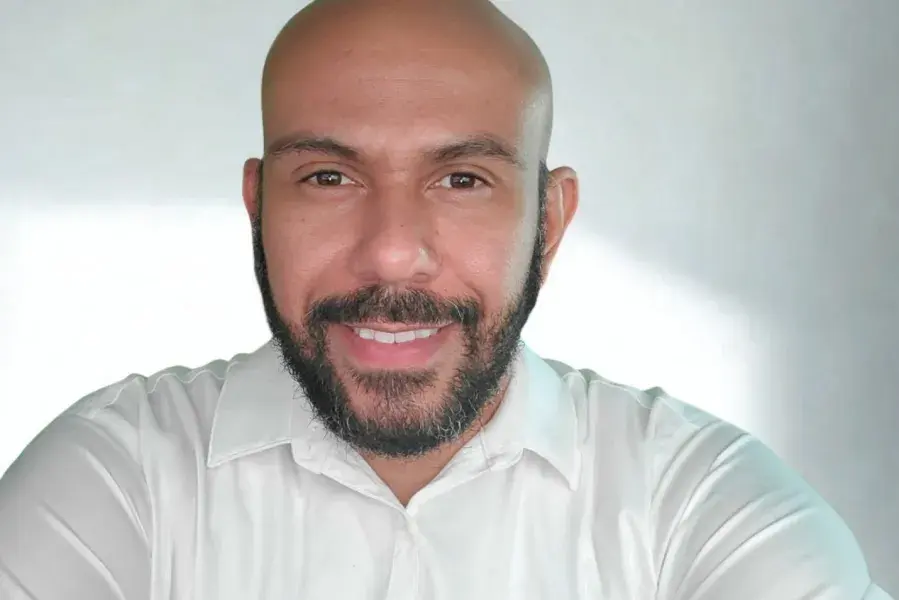

For Earnest Walker, service has always come before spotlight.
Originally from Columbus, Georgia, right on the Georgia-Alabama State line, Earnest grew up as a self-described Southern kid with a natural aptitude for science and technology. In school, academics came easily, and it wasn’t until later in life that he fully appreciated the value of structured learning and intentional effort.
After building a successful career in technology and returning to higher education as an adult learner, Earnest enrolled at the University of Arizona Global Campus (UAGC) around 3 years ago to expand his knowledge and open new doors. What he didn’t anticipate was how central peer support and mentoring would become to his academic journey.
Today, Ernest is known across the UAGC community as a Peer Tutor (providing academic support), CHAMPS Peer Mentor, and Student Ambassador (supporting student success and engagement), serving in both academic support and student engagement roles. He is a student leader who consistently steps in to support others, especially those navigating online learning for the first time.
That foundation helps explain why Earnest doesn’t just focus on grades or completion. Instead, he pays close attention to how students communicate, where they hesitate, and what they may be struggling to say out loud.
Helping others succeed has never been about formal titles; it’s about paying attention.
As an adult learner at UAGC, Earnest noticed something early on that many students overlook: not all struggles are stated outright. Sometimes, they’re hidden between the lines of a discussion post, a hesitant response, or a simple thank-you comment.
“A lot of times it’s not going to be direct,” Earnest explained. “People don’t want to seem like they don’t know. You kind of have to read between the lines.”
That mindset, shaped by years of leadership experience in retail management and technical roles, has defined how Earnest approaches peer support. Rather than waiting for classmates to ask for help, he listens, observes, and responds intentionally.
When fellow students commented that his discussion posts helped them understand concepts they were struggling with, Earnest saw a pattern. Many were returning to school after long breaks, often from careers that didn’t require extensive written communication or academic-style feedback.
“What I found was that a lot of returning students lacked those communication skills, not because they weren’t capable, but because their jobs never required it,” he said. “That doesn’t mean they can’t learn it.”
That realization motivated Ernest to deepen his involvement through peer tutoring, where he provides academic support in specific subject areas, and the CHAMPS Peer Mentoring Program, which focuses on student connection, encouragement, and overall success at UAGC. From his perspective, discussion posts aren’t busy work; they’re training grounds for real-world collaboration.
“You’re not here to learn to work by yourself,” he said. “You’re learning how to communicate, how to give and receive feedback, and those are skills you’re going to use everywhere.”
Technology as a Tool, not a Crutch
One topic that frequently surfaces in student conversations is the use of AI tools like ChatGPT and Grammarly. Earnest approaches the subject with nuance, informed by his background in IT development and AI research outside of school.
“You can tell when something sounds built,” he said. “When everything reads the same, the human part gets lost.”
He shared that he intentionally stepped back from overusing grammar tools because they flattened his voice. While AI can help with structure, citations, and clarity, it can’t replace personal insight or original thinking.
“These tools are used all over the world, in Fortune 500 companies,” Earnest noted. “Learning how to use them responsibly is part of learning. But your ideas still have to be yours.”
In his view, even frustration from students, questions like “Why do I have to learn this?” signal growth. If a concept feels unfamiliar or uncomfortable, that often means learning is happening.
“If you don’t understand why it matters yet,” he said, “that means you’re being exposed to something new.”
Looking Ahead: Mentorship Beyond Graduation
When Earnest first enrolled at UAGC, his goal was ambitious and business-focused: building a billion-dollar technology enterprise. But years of mentoring, tutoring, and community engagement reshaped that vision.
Now preparing to graduate, he’s considering a future in academia, with aspirations of becoming a professor.
“I didn’t expect that,” he admitted. “But once I saw how good it feels to help people understand something, really understand it, that changed everything.”
For Earnest, education isn’t just about credentials or career advancement. It’s about access, confidence, and creating spaces where students feel supported enough to grow.
Through his role as President of the CHAMPS Distinguished Mentors Council, he’s been open about his plans to remain involved with the University community even after earning his degree. As part of the CHAMPS program, alumni can continue mentoring, supporting graduate students, or learners further along in their academic journeys.
“That’s the plan,” Earnest said. “It’s about giving back to the community that’s given so much to me.”
For Earnest, mentorship is deeply personal. He remembers being bored in school as a teenager because much of the material came easily. But over time, he learned an important lesson: knowing something doesn’t mean there’s nothing left to learn.
“What I’ve chosen to do is build on top of the knowledge,” he explained.
That approach shaped how his instructors responded to him and how his peers benefited from his engagement. By actively participating in discussion posts and tutoring sessions, Earnest often spots where students are misunderstanding an assignment long before they realize it themselves.
He recalled a recent peer tutoring session with a student who had struggled with learning disabilities throughout their life and felt anxious about sharing written work.
“We went through the instructions step by step,” he said. “That’s how they told me they learn best.”
Rather than correcting or rushing the student, Earnest focused on tools and strategies, reading instructions aloud, breaking tasks into smaller pieces, and pointing them toward resources like the Writing Center and library support. While he’s careful to stay within the boundaries of his role, he understands how powerful it can be to simply meet students where they are.
“We’re not counselors,” he noted. “But we can give them tools.”
That philosophy extends to how he views technology and learning overall. Many adult learners, he explained, return to school after years of working on “autopilot,” comfortable in routines that didn’t require critical thinking, academic writing, or digital platforms.
“Now they’re learning how to think critically again,” Earnest said. “And they’re doing it in a world where technology is everywhere.”
For him, programs like CHAMPS and the peer tutoring offered in foundational courses play a crucial role in helping students bridge that gap. It’s also why Earnest believes there’s room to further integrate technical support into early coursework.
When asked about the future, Earnest’s answer is grounded and clear: stay connected, keep mentoring, and eventually teach.
Helping others learn, he’s discovered, isn’t just something he’s good at; it’s what gives his education its greatest meaning.
By Destini Huitron Espinoza
Student Journalist, Global Campus Voice
Updated February 2026